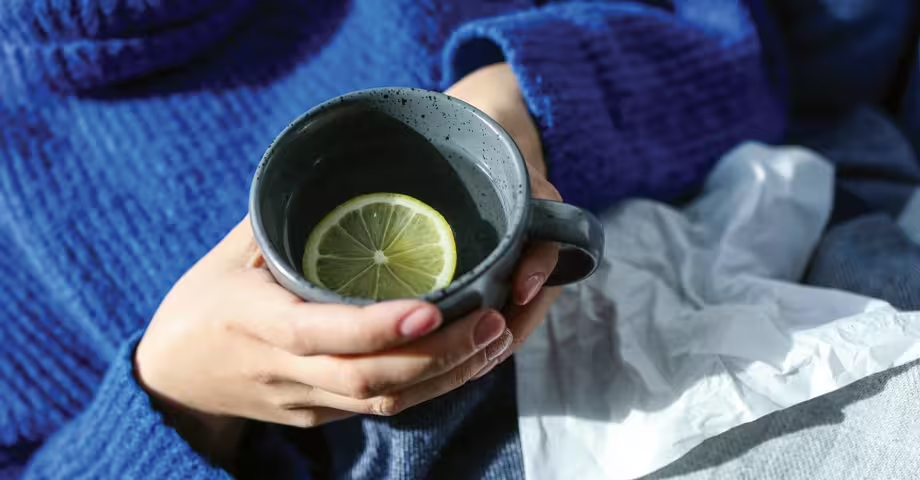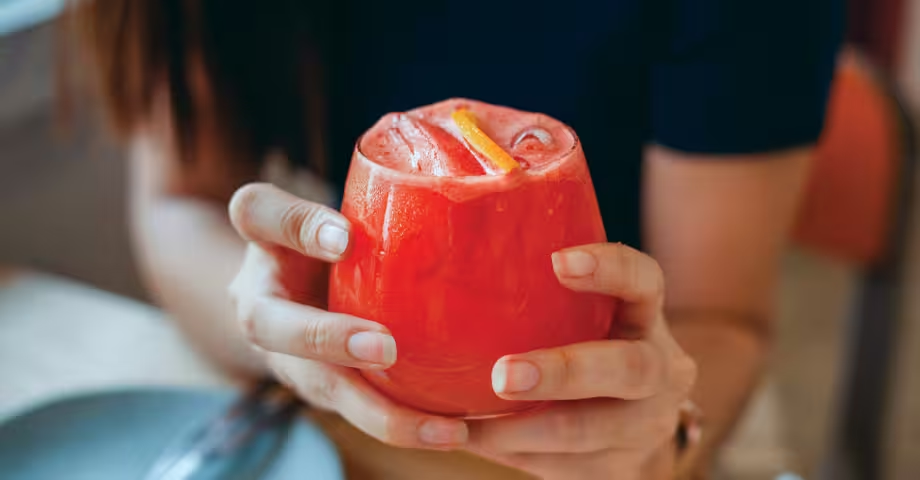
Dry January demands participants to ditch alcohol completely for an entire month. This is a simple challenge for casual drinkers, but not for people whose lives involve constant drinking at the pub or at home after a grueling day at work.
If you can’t simply turn your back on booze this New Year, then sip on something else: a THC-infused drink. Let’s talk about why cannabis beverages are ideal alcohol replacements not only in January but all-year round.
Progress Over Perfection: What Is the Wellness Focus for January?
January doesn’t have to be a hard reset. Sure, you can still aim to avoid alcohol consumption as much as you can, but if you give in to liquor for a day or two, your resolve for all the other days must still be considered a win. A zero-alcohol month shouldn’t be the only measure of your progress.
Psychology Today and Columbia Psychiatry both point to a softer approach: instead of denying yourself alcohol from January 1 to 31, set realistic goals for the new year. If you can’t stop drinking for a month, then just drink less or schedule alcohol-free days. These aren’t as extreme as Dry January, yet they still build healthier habits.
A 2025 National Library of Medicine review on Dry January found that methods prioritizing progress— no matter how small— can also improve well-being and reduce alcohol use months later, even without full abstinence. According to a widely cited American Psychological Association study done in 2016, despite being unable to complete Dry January, unsuccessful participants still reported fewer drinking days and stronger self-control after the month ended.
These prove that the real power of resolutions for the New Year lies in smooth momentum over strict compliance. If you’re overwhelmed with Dry January, don’t go cold turkey and return to your old ways. To make a lifestyle change, you can opt to cut the amount of booze you’re drinking or swap it for an alternative like a low-dose cannabis drink.
Why Mindful Consumption Is Part of Modern Wellness
In modern times, alcohol is just a few steps or clicks away. You can find liquor in the nearest convenience store. You can order your favorite beer online with a delivery guy placing it on your doorstep within minutes. Because alcoholic beverages are easily attainable, dropping your drinking habit is harder than ever.
It’s no different this New Year, so if you want to stay true to your “no more booze” resolution, mindful consumption should be your first step. The New York Times says you must be “sober curious”, someone who questions their impulse to drink alcohol. By thinking before you sip, you get to pick your pace, set a limit, and choose to refuse if you can.
TIME and Kerry Health and Nutrition Institute mark intention as the vital factor. You won’t drink on autopilot anymore. As long as you are mindful, you can notice how a drink actually makes you feel and slow down whenever you need to.
Moreover, many sober curious individuals now view alcohol as disruptive to focus and emotional fluency. They came to realize that booze only dulls the senses and harms the body. Meanwhile, cutting down the alcohol they drink, even partially, has been linked to better sleep, steadier energy, and improved mood.
Once you realize that liquor isn’t essential to connection, you’d rather have a functional alternative that actually supports your wellness: a delicious cannabis drink. Awareness is your guide to drinking mindfully this January.

THC-Infused Drink Benefits for Relaxation and Recovery
If one of your New Year’s resolutions is to abstain from drinking alcohol, then you’d like cannabis drinks. We outline how these beverages make forgetting booze easier than you think:
Hangover-Free Mornings
When alcohol goes into your system, it metabolizes into toxic byproducts that leave you foggy and dehydrated. If you’re even more unfortunate, it can also give you a splitting headache, fatigue, and disrupted sleep.
THC beverages do the opposite because they provide hydration and clarity. After you sleep peacefully at night, you wake up to a reenergized body that’s ready to move and a refreshed, clear mind that’s functioning at its peak capacity.
Controlled Relaxation, No Crash
With precise dosing, THC-infused beverages won’t lead you to a blackout or a drunken stupor. Nor will you end up on the floor in the all too familiar edible story where you had the whole cookie. You can choose between low-dose (often with 2-5 mg THC) or regular-dose (with over 5 mg THC) options, so you can unwind within your limits.
Cannabis beverages have a smoother onset and more predictable effects than edibles and joints, so you can stay present and emotionally steady when you take a sip. There’s no spike-and-slump cycle, just a gentle lift.
Recovery That Actually Supports Staying Healthy
Whereas alcohol is known to ruin the liver and strain the heart after long-term consumption, cannabinoids like THC are famously studied for their anti-inflammatory and muscle-relaxing properties. A THC drink can help your body bounce back without taxing your vital organs and wrecking REM sleep the way alcohol does. You get revitalized with deep, uninterrupted slumber and pain relief.
Lower Health Load, Same Social Ease
THC drinks are a crowd favorite because they’re delicious despite typically containing low to zero calories and sugar. Due to this nature, they support weight management and even weight loss.
On the contrary, alcohol is packed with high sugar and empty calories, affecting not only your weight but also your general health. It raises your blood pressure, messes with insulin production, turns your liver fatty, and increases cancer risk, among other things. These are burdens THC beverages simply don’t carry.
A Lifestyle Change That Feels Natural
Instead of forcing you to halt drinking completely, THC-infused drinks provide you with options that taste better and feel as good as booze but are not as harmful. If you ever get an urge to drink, you can sip on a THC beverage rather than liquor.
As you commit to your resolutions for the New Year, cannabis drinks offer a refreshing alternative that doesn’t derail your progress. You stay connected, clear-headed, and aligned with your goals for wellness.
Wellness in the New Year: 5 More Achievable Resolutions for Lasting Change
January is always the time to make necessary changes so you can start the year right. Of course, letting go of alcohol is good in itself, but if you want to be healthier, then you need other resolutions to improve your well-being. These small shifts shape a lifestyle change that actually lasts:
Take a Daily Walk
A 20-30 minute walk sounds simple because it is, and that’s the point. Even without intense workouts, consistent physical activity, such as daily walking, strengthens your immunity and brightens up your mood. Since you go out to walk, the sun exposure boosts your vitamin D levels as well. It’s a low-friction, relaxing way to get some regular exercise.
Drink More Water
Finding other alcohol alternatives is ideal for suppressing your cravings, but nothing beats pure water. When you drink the standard 8-10 glasses of water in a day, you gain better energy, appetite regulation, and cognitive clarity. The hydration it provides also gives you relief after gym sessions, nightouts, and long days of work. It’s still the default drink that offers you only benefits and no drawbacks.
Stretch for 10 Minutes
Most people spend hours sitting in front of desks, whether in school or at work. Taking 10 minutes to stretch out your limbs can break the inactivity while improving your circulation, flexibility, and tension release over time. It brings motion to an otherwise sedentary lifestyle, giving your muscles the blood flow they require.
Stop Eating 3 Hours Before Bed
You shouldn’t sleep with a full stomach. Just 3 hours before your bedtime, you must avoid eating anything so you can complete your digestion before you lie down and call it a day. This lowers acid reflux and prevents indigestion, conditions that can disturb your sleep if not suppressed. When you hold off on late-night snacking, you get better rest up until the morning.
Practice Positive Affirmations
Self-talk is actually good for you. Telling yourself positive affirmations can decrease stress and increase resilience when practiced consistently. All you have to do is speak a few intentional phrases each day, and these will shift your mindset on how you meet challenges. After all, wellness starts in the mind, then ripples outward.

Setting Goals for the New Year Without Burning Out
Thoughtful resolutions for the New Year are helpful to get you back on track, but following them from January to December can become a challenge if you lose motivation and direction. Your fresh start must eventually turn into a routine. Here are some strategies that can keep your energy and enthusiasm sustainable:
Start Small with Micro-Habits
Keep your goals actionable by beginning with tiny steps. If you’re going to take a walk, your first step can be putting on your shoes. If you’re too lazy to drink water, make an easy challenge like walking to the refrigerator every few hours.
The book Atomic Habits by James Clear highlights that these micro-commitments fortify neural pathways and compound into lasting behaviors without overwhelming or exhausting you. Instead of chasing after big targets, track one small habit per week so you can adjust naturally and reinforce your motivation.
Use the SMART Framework
Are you struggling to accomplish the goals you’ve set? Revise them and make them Specific, Measurable, Achievable, Relevant, and Time-bound (aka SMART). For example, “walk 10 minutes every Monday from 6 AM to 7 AM” outperforms vague goals like “get fit.”
When you get as clear as possible on what you must do, attach a time frame for every objective, and monitor your progress, you eliminate the resistance of actual execution. You can even review and tweak your goals biweekly to keep them realistic.
Allow Flexibility and Grace
As we’ve already established, progress is better than perfection. Don’t be too hard on yourself if you miss a day of your routine or if you’ve taken a single sip of alcohol when you promised not to. What’s important is that you win more than you lose.
Allow yourself to fail from time to time, and recalibrate after every failure. Don’t get easily discouraged because even partial adherence produces measurable health gains. Practice self-forgiveness to maintain your momentum without guilt.
Schedule Recovery and Reflection
Your year shouldn’t be a continuous hustle to meet your goals. Alternate your effort-extensive and discipline-driven days with moments of intentional rest and indulgence. Nowadays, people call these breaks “cheat days”, where you give yourself leeway to eat what you want to eat, drink what you want to drink, and do what you want to do— albeit with limits.
Journaling energy levels or reflecting on achievements can also build your self-confidence and fulfillment, which can make habits sustainable and enjoyable. Make your goals fun and less demanding because you’re likely to follow them if you like doing them or if you don’t feel deprived in your pursuit of them.
Leverage Accountability Partners
Going solo on your New Year’s resolutions may not be the best course of action. You only have so much self-restraint and motivation. At some point, you’d feel like giving up and yielding to your normal routines.
To remain accountable, share your goals with friends, family members, or wellness communities. Having someone to check in on you increases your likelihood to adhere to your targets. They can also provide moral support and encouragement whenever you’re disheartened or losing the will to stick to your plans.
Drink Less or Drink Right: What to Do for Good Health in the New Year?
Now that you know how to accomplish your New Year’s resolutions, including minimizing your alcohol intake, it’s time to make a choice: should you drink less or drink right?
If you can’t quit drinking alcohol immediately, then drink less, gradually reducing your consumption until you’re able to get by without it. However, if you’re able to resist your craving for booze, then drinking right makes more sense. Switch your liquor bottles for cans of THC-infused beverages.
As noted by HSE, you get to experience more quick wins the less alcohol you pour into your system. Expect better sleep, lower blood pressure, and reduced inflammation. Nutrient absorption improves, digestive discomfort eases, and the stress on your liver diminishes within weeks. NHS and Gundersen Health even document longer-term benefits, including weight management, enhanced mood, and lower cancer risk.
Substituting low-dose cannabis drinks amplifies these gains. They soothe you, hydrate you, and offer gentle euphoria while taking away any possibility of hangovers or dehydration. If you’re interested in making the shift, explore Wunder THC-infused drinks for a flavorful approach to staying healthy this January and beyond.